
Why Is My Dog Licking Their Paws?
If your dog is licking their paws more than usual, the most common reasons are allergies, irritation, boredom, or an injury they’re trying to soothe. Occasional paw licking is normal grooming behavior, but when it becomes frequent, intense, or focused on one particular spot, it’s usually your dog’s way of telling you something is bothering them. At Caring Hearts Animal Hospital in Matthews, NC, dog licking paws is one of the most common behavioral concerns pet owners bring to us, so let’s look at what’s typically behind it.
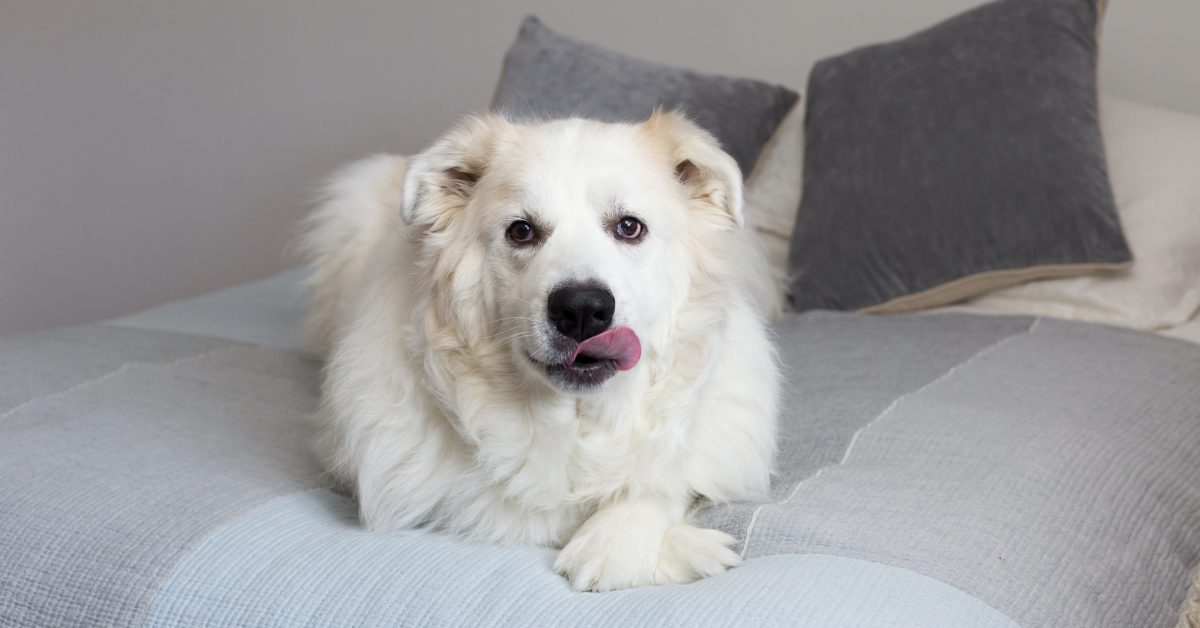
Normal Grooming vs. Excessive Licking
All dogs lick their paws occasionally as part of normal self-grooming. The difference between typical behavior and a concern worth watching is frequency, intensity, and whether it’s focused on a specific paw or spot. A dog who licks briefly after a walk is very different from one who returns to the same paw throughout the day.
Common Reasons Behind Dog Licking Paws
Dog licking paws can stem from several different causes, and often more than one factor is involved at once.
- Environmental allergies: pollen, grass, and dust can trigger licking, especially seasonally
- Food sensitivities: certain ingredients can cause skin irritation that leads to paw focus
- Contact irritants: salt, ice melt, and certain lawn chemicals can irritate paw pads
- Boredom or anxiety: licking can become a repetitive, self-soothing behavior in under-stimulated or stressed dogs
- Injury or foreign object: a thorn, cut, or embedded object can cause focused licking at one specific spot
Focused licking on a single paw is more often linked to a physical cause, like an injury, foreign object, or localized irritation, compared to licking that affects multiple paws, which points more toward allergies or systemic causes.
Allergies and Dog Licking Paws
Allergies are one of the leading causes of dog licking paws, particularly seasonal environmental allergies and food sensitivities. Paws come into direct contact with allergens like grass and pollen, which is part of why they become a common target, and many dogs show increased licking during high-pollen seasons as a result. Some dogs also develop a secondary yeast or bacterial overgrowth on the skin once allergies cause enough irritation, which can intensify the licking further.
Signs the Behavior Has Become a Problem
Physical Changes to Watch For
Redness, swelling, hair loss, a rusty-brown staining from saliva, or an unpleasant odor between the toes can all indicate the licking has progressed to skin irritation or infection.
Behavioral Changes to Watch For
Licking that increases in frequency, happens obsessively, or disrupts sleep and normal activity suggests the behavior has moved beyond routine grooming. Dogs who don’t get enough mental or physical stimulation sometimes develop repetitive behaviors, including paw licking, as a way to self-soothe. This is more likely when licking happens during quiet, unstimulated periods rather than after being outside.
What You Can Do at Home
- Check paws regularly for visible cuts, debris, or swelling
- Rinse paws after walks in areas treated with salt or chemicals
- Provide more mental stimulation through toys or activity if boredom seems to be a factor
Keeping a simple log of when the licking happens, and what your dog was doing beforehand, can help your veterinarian narrow down the cause more quickly.
When to See Your Matthews Veterinarian
If the licking is persistent, focused on one area, accompanied by redness or swelling, or hasn’t improved with basic at-home care, it’s time for a veterinary evaluation. Left unaddressed, ongoing licking can lead to secondary skin infections that require more involved treatment. Food sensitivities are also a recognized contributor to skin irritation in dogs, and paws are a common area affected, particularly in dogs with a broader pattern of itchy skin, so a vet visit can help pinpoint the actual cause rather than guessing.
Getting to the Root of the Behavior
Dog licking paws is rarely just a habit, it’s usually a signal worth paying attention to. Whether the cause turns out to be seasonal allergies, an irritant, or something that needs a closer look, our team at Caring Hearts Animal Hospital in Matthews is equipped to help you figure out what’s behind it and get your dog comfortable again. Call us at 704-893-2799 to make an appointment for dog as soon as possible.
Recent Posts
- « Previous
- 1
- …
- 8
- 9
- 10
About Us
At Caring Hearts Animal Hospital, we’re not your typical veterinarian in Matthews, NC. We have been welcoming dogs and cats from Mint Hill, Indian Trail, and Union County for over 15 years, and our team is comprised of pet owners, too–so we appreciate the bond you share with your companions!