
Sleeping Cat Behavior: What’s Normal and What to Watch For
Cats sleep more than most household pets, and a sleeping cat can show a wide range of perfectly normal behaviors. A sleeping cat may twitch, snore softly, stretch frequently, or shift positions throughout the day. These patterns usually reflect your cat’s natural instincts and daily rhythms. In some cases, however, changes in sleeping habits can signal stress or an underlying issue, which is why knowing what’s typical helps you notice when something seems off. This guide explains how much sleep a cat usually needs, what sleeping positions mean, and when shifts in behavior should prompt a call to your veterinarian at Caring Hearts Animal Hospital in Matthews, NC. If you have questions or want to schedule an appointment, call 704-893-2799.
Understanding Normal Sleep Patterns in Cats
Cats are known for long naps and frequent rest periods throughout the day. Their sleep habits stem from their natural history as crepuscular animals, which means they are most active at dawn and dusk. A sleeping cat might nap lightly for several hours and then enter deeper sleep stages where dreams and muscle twitches occur. Healthy adult cats often sleep between 12 and 16 hours a day, and kittens, seniors, and highly active cats may rest even longer. These patterns shift based on your cat’s age, lifestyle, and environment. By watching your cat’s routine closely, you learn what is normal for their daily rhythm. Awareness of these habits gives you a baseline to compare future changes against and supports a calmer, more predictable home routine.
Light Sleep vs. Deep Sleep
Cats experience two primary sleep stages: light sleep and deep sleep. During light sleep, your cat stays alert to sounds, movements, and household activity. Their ears may flick, their tail might give a quick twitch, and their eyes can open briefly to scan the room. This stage allows them to conserve energy while staying aware of their surroundings. Deep sleep, on the other hand, is when your cat’s body fully relaxes. You might notice slow breathing, gentle twitching, and subtle paw movements that look like they are running or playing. Deep sleep is restorative and supports your cat’s overall wellness. A healthy sleeping cat cycles between these stages throughout the day, creating a balanced and natural rhythm of rest.
How Age Influences Sleep Needs
Age changes the way cats sleep. Kittens, who grow rapidly and expend lots of energy, can sleep up to 20 hours a day. Their naps help them develop strong muscles, healthy bones, and steady coordination. Adult cats still sleep frequently, but they tend to spread their naps more evenly across the day. Senior cats often rest longer due to decreased activity and mobility changes. A sleeping cat’s age-related habits can shift gradually, and this is often completely normal. Pet parents in Matthews, NC, should expect some small changes as their cat grows older, especially if the cat prefers quieter spaces or softer beds. If major changes occur suddenly, it’s helpful to make note of them and call 704-893-2799 for guidance.
Why Cats Choose Certain Sleeping Positions
A sleeping cat can curl tightly into a ball, stretch across an entire couch, or sleep on their back with paws in the air. These positions often show comfort, trust, or a preferred temperature. Each position offers clues about your cat’s mood, habits, and environment. By understanding the meaning behind these common poses, you gain better insight into their comfort level and daily experiences. These subtle details help you build a more supportive home environment that matches your cat’s needs.
Curled-Up Position
Many cats curl into a tight ball, wrapping their tail around themselves and tucking their paws under their body. This position protects their core and keeps them warm. It’s extremely common in colder months or when a cat seeks security. This sleeping style also makes it easier for them to wake quickly and reposition if needed. Some cats prefer small boxes or covered beds for this reason. If your cat chooses this position every day, it may simply reflect their desire for a cozy, enclosed environment. Independent and cautious cats often favor this shape because it allows them to relax while staying ready for movement.
Stretched-Out Position
A cat stretched from nose to tail indicates confidence and comfort. Cats who sleep fully extended feel safe in their surroundings and enjoy the space available to them. This position also helps them stay cool by increasing the surface area exposed to the air. Many cats choose this posture on warm days or after physical activity. Pet parents often see this during long afternoon naps when their cat is completely relaxed. Stretching out can also help relieve sore muscles after playtime. Seeing your cat in this position regularly often means they feel completely at ease in your home.
Belly-Up Position
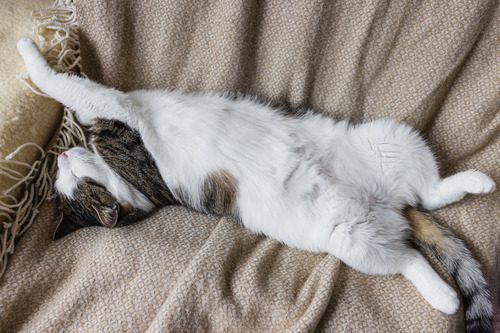
A sleeping cat lying belly-up shows complete trust. This posture exposes their most vulnerable area, so when a cat sleeps on their back, it means they feel deeply safe in their environment. While this position looks inviting, most cats prefer not to have their belly touched, even when they rest this way. The pose also helps them release excess heat and relax their spine. If your cat chooses this position often, it’s a strong sign that they feel calm, confident, and protected inside your home. Cats in Matthews, NC, often enjoy this posture during warm afternoons or when lounging near a sunny window.
Dreaming, Twitching, and Other Sleep Behaviors
A sleeping cat may twitch, paddle their paws, chatter softly, or flick their tail during dreams. These movements are completely normal and occur during REM (rapid eye movement) sleep. REM sleep is the stage where the brain processes daily experiences, much like in humans. Cats may appear to be running in their sleep, playing, or reacting to something they saw earlier in the day. These small motions can look surprising at first, but they are a typical part of feline sleep cycles. Cats spend less time in REM than humans, which explains why their twitching often appears quick and sporadic.
Why Cats Twitch During Sleep
Twitching happens when electrical activity in the brain triggers small muscle responses. Kittens often twitch more than adults because their brains and bodies are still developing. Adult cats twitch as well, especially after energetic play sessions. A sleeping cat that appears to twitch or move lightly is usually dreaming or reacting to sensory input. These movements remain brief and gentle. They often stop quickly and blend into the cat’s next sleep cycle. This behavior shows that your cat’s brain is active and processing daily stimulation.
Normal Noises During Sleep
Many cats make soft noises when they sleep. You might hear chirps, faint meows, or gentle snoring. Snoring usually comes from the nasal passages or soft palate vibrating slightly during deep sleep. Some cats snore occasionally, while others do it more regularly based on their sleeping position. A peaceful sleeping cat may also let out slow, rhythmic breaths or adjust their posture with a small grunt or sigh. These quiet sounds reflect deep relaxation and comfort.
When Sleeping Cat Behavior Changes
While most sleeping habits fall within a wide range of normal, noticeable changes in routine can signal stress or discomfort. Cats often hide differences in behavior, so sleep habits sometimes offer the first visible clue that something is different. Pet parents may notice shifts in sleep length, location, posture, or responsiveness. If you see sudden or dramatic changes, it helps to reach out to your veterinarian to discuss next steps.
Changes in Sleep Duration
If your sleeping cat begins spending significantly more or less time resting than usual, you may want to jot down these changes. Increased sleep can reflect reduced activity or changes in mood, while reduced sleep can stem from overstimulation or discomfort. Cats in busy households might alter their schedule when new pets, guests, or routines are introduced. Tracking these shifts helps you determine whether the change is temporary or persistent.
Changes in Sleeping Location
Cats who suddenly hide more often or choose new sleeping spots may be responding to household changes. Noise, temperature shifts, new furniture, or unfamiliar scents can influence where they rest. Some cats may search for taller perches, while others prefer deeper, more concealed areas. Observing these patterns helps you understand what your cat needs to feel more at ease. A consistent pattern of hiding may indicate stress, so it’s helpful to share this information with your veterinary team when you call 704-893-2799.
Supporting Healthy Sleep Habits for Your Cat
Cats thrive when their environment offers comfort, stability, and predictable routines. You can support your sleeping cat by maintaining a calm home, offering cozy resting areas, and keeping their daily schedule steady. Cats often sleep better when they have access to quiet spaces, elevated perches, and soft bedding. Regular playtime and mental enrichment also encourage a balanced sleep-wake cycle. As you learn more about what your cat prefers, you can adjust your home setup to match their needs. Your observations help create a peaceful environment that supports their natural rhythms. If you have concerns about your cat’s sleep behavior or want to discuss changes you’ve noticed, call Caring Hearts Animal Hospital at 704-893-2799 to schedule a visit.
Recent Posts
About Us
At Caring Hearts Animal Hospital, we’re not your typical veterinarian in Matthews, NC. We have been welcoming dogs and cats from Mint Hill, Indian Trail, and Union County for over 15 years, and our team is comprised of pet owners, too–so we appreciate the bond you share with your companions!